

Picture March 10. It's 5:45 p.m., your review queue is on track, and nothing in your inbox needs you tonight. You close your laptop and go to dinner.
For a lot of accounting firm owners, that sounds like someone else's firm. It doesn't have to be.
The short answer: a calm tax season still has long days, but they end. Documents come in through one place, someone else chases what's missing, your team knows who owns each client, and you spend your hours on review and advice instead of admin. A less stressful tax season is something you build in October through December, before the volume hits.
What does a calm tax season look like day to day?
Morning. You open one list of returns ready for review. Your team has already sorted what came in overnight and flagged what's still missing. You start with the work only you can do.
Midday. Client questions about "where is my return?" go to your team, not your cell phone. You take the two calls that need you and skip the ten that don't.
Late afternoon. Missing documents were requested automatically through your portal, and someone followed up by phone. Nobody on the team is asking, "I thought you were handling that?"
Evening. You're home. Some nights in March you'll still work late for a deadline, and you decide when.
What's the difference between a busy tax season and a chaotic one?
Every firm is busy from January through April. Chaos is when the busy-ness has nowhere to go but you.
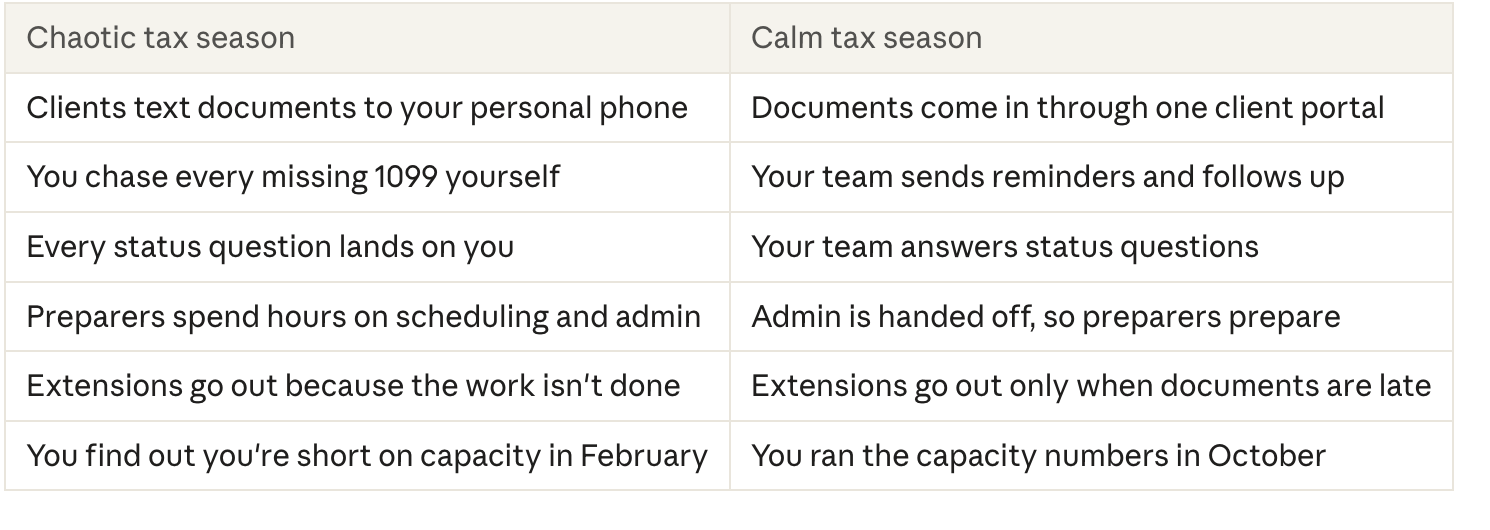
What makes a calm tax season possible?
Five things, set up before January:
One way in for documents. A client portal with automatic reminders. We handle TaxDome setup and Canopy setup for tax and accounting firms that want this running before the rush.
Admin off your plate and your preparers' plates. Document collection, scheduling, inbox and status updates go to support built for tax firms, like our virtual assistant services.
Clear ownership. Every client has a named owner on your team, so nothing falls between people.
Client boundaries set in December. Response times, one channel and office hours, shared before the season starts. More on that in How Do I Keep Tax Season From Taking Over My Whole Life?
Enough capacity. You've checked the hours your returns need against the hours your team has. Here's how: How Do I Know If My Firm Has Enough Capacity for Tax Season?
When these pieces work together, that's what our operations support for accounting firms is built to do. You can read what firm owners say on our Client Love page.
Is a calm tax season realistic for a small firm?
Yes, and small firms often feel the change fastest. In a firm of two to five people, moving 10 to 15 hours of admin a week off the owner changes the whole season. The work stays the same size, but it stops piling up on one person.
Frequently Asked Questions
How do I reduce tax season stress? Take admin and client communication off the owner, give documents one way in, and plan capacity before January. Most tax season stress comes from those three gaps.
Can I still have a calm tax season if I start in January? You can improve it, but it's harder. New support needs a few weeks to learn your firm, so October through December is the best window.
Will my clients accept new boundaries? Most will, especially when you explain them in December and keep them consistent. Clients care about getting their return on time and knowing where it stands.
Does this apply to fractional CFOs? Yes. Swap tax season for your clients' month-end and year-end close. The same pieces apply: one way in, clear ownership, admin handed off.
Ready for a calmer tax season?
At Guy & Associates, we're the operations and marketing partner for tax firms, accounting firms and fractional CFOs. We build the systems and the support so your firm runs without running through you.
To be fully onboarded before tax season, we need to start by December 12. Book a Stop Being the Bottleneck Strategy Call, and we'll map out what your calm tax season needs. You can also meet our team or see all of our services.
Want more like this? Join the newsletter or browse more posts on the G&A blog.